
Home/Blog/The Custom Gate Design Process: From Structural Engineering to Final Install
August 24, 2026
The Custom Gate Design Process: From Structural Engineering to Final Install
Discover the custom gate design process that prevents sagging & rust. Our guide covers structural engineering, galvanized steel, and a flawless final install.
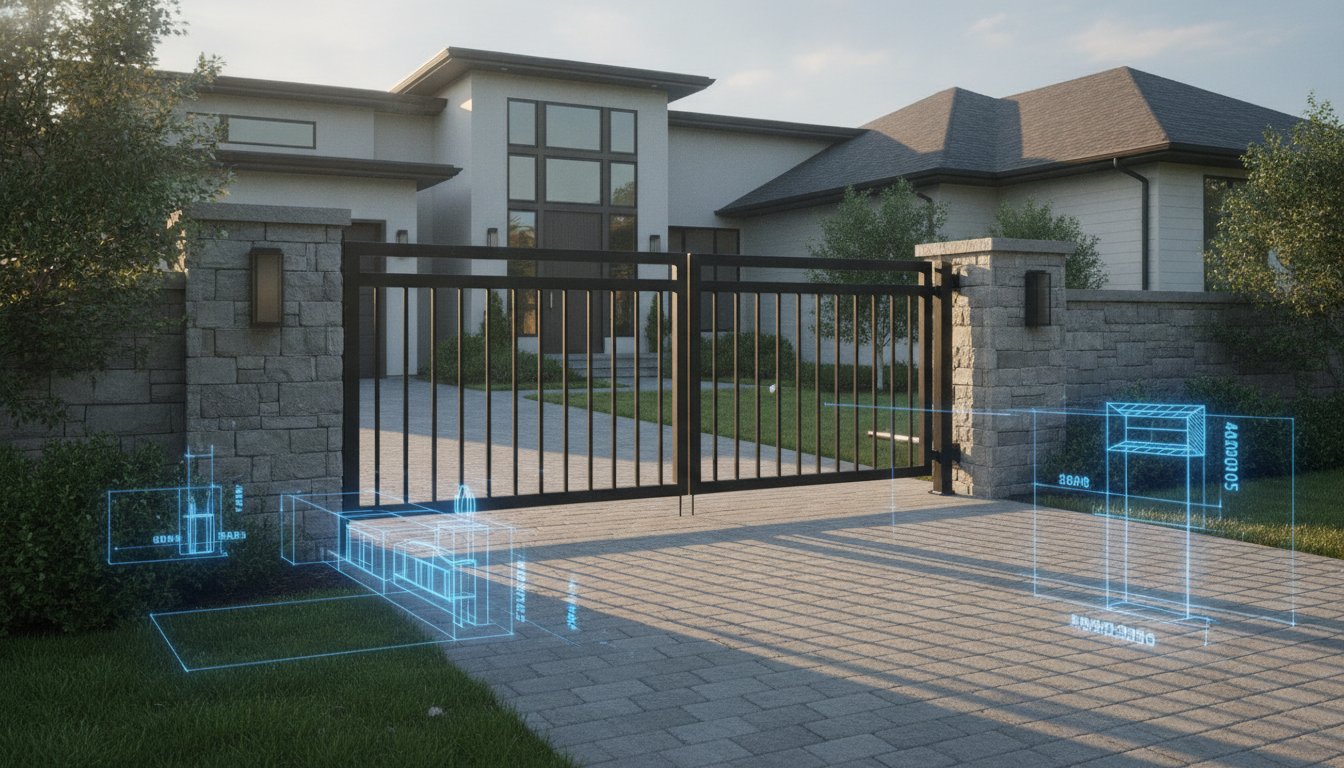
A custom gate is a structural engineering project masquerading as curb appeal. If the physics are wrong, the design is a failure. You want a front entry that commands respect, not one that drags across the concrete every time the North Texas wind picks up. Most homeowners expect a gate to last a lifetime; however, they're often left dealing with sagging hinges, rust streaks, and the headache of coordinating between separate fabricators and motor installers. It's a cycle of superficial fixes that never address the core structural issues.
You deserve a system built on technical competence rather than aesthetic fluff. This guide details the exact custom gate design process required to ensure your installation survives decades of soil shifts and extreme weather without failing. We'll show you why we prioritize galvanized steel over raw iron and how we manage the entire lifecycle from our Argyle shop. You'll learn about the technical workflow behind structural load calculations, UL 325 safety compliance, and the final professional install. We build for functional excellence. We don't take shortcuts.
Key Takeaways
- Prioritize structural engineering over aesthetics to prevent common failures like sagging frames and dragging hinges.
- Choose hot-dip galvanized steel over raw iron to survive North Texas humidity and prevent rust after a single season.
- Follow a rigorous 5-stage custom gate design process that uses CAD blueprints to account for specific wind loads and soil shifts.
- Utilize a single-source fabrication and installation team to eliminate coordination headaches between gate builders and motor technicians.
- Integrate UL 325 safety standards during the initial design phase rather than treating automation as a secondary add-on.
The Foundation: Why Structural Engineering Trumps Aesthetics
A custom gate isn't just a piece of art. It's a cantilevered load that must remain perfectly level under constant stress. Many homeowners focus on the scrollwork or the paint color, but aesthetics mean nothing if the gate sags within six months. The custom gate design process starts with physics, not pictures. We define every project by the balance of weight, span, and torque. If you ignore these structural engineering principles, you're building a future maintenance nightmare. It's the difference between a gate that works and a gate that breaks.
In North Texas, the environment is hostile to heavy structures. Our expansive clay soil shifts constantly. This movement dictates post depth and footing volume. A post that isn't deep enough will lean as the soil dries out or swells with rain. This movement causes the gate to drag on the driveway or fail to latch. We use heavy-wall structural steel to prevent frame deflection. This ensures the frame stays rigid and the joints remain tight, even when the gate is under maximum load. We build for the soil we have, not the soil we wish we had.
Calculating Wind Loads and Gate Surface Area
Solid-panel gates are popular for privacy, but they act like massive sails in North Texas storms. A 14-foot swing gate with solid wood or steel infill can catch hundreds of pounds of wind pressure. If you don't engineer for these specific wind-load requirements, you'll face motor burnout or warped frames. We adjust frame thickness and internal reinforcement based on the gate's height and span. We don't guess. We calculate. It's about building a frame that can resist twisting when a 60-mph gust hits your property.
Hinge Geometry and Pivot Point Physics
The hinge is the most common failure point in a gate system. Standard barrel hinges often seize or fail under the weight of a heavy steel gate. We use heavy-duty sealed bearing pivots. These distribute the load across a larger surface area and ensure smooth travel for decades. Pivot placement is also vital. Correct geometry reduces the leverage required by the gate operator. This means less strain on the motor and a longer lifespan for your automation system. Smooth travel isn't just about feel; it's about reducing mechanical wear on every internal component.
Material Science: Galvanized Steel and Environmental Resilience
Raw iron is a liability in North Texas. The humidity in the DFW metroplex is relentless, and if you use raw iron with a standard spray-on primer, you can expect rust streaks within a single season. We don't accept that. Our custom gate design process centers on galvanized steel because it's the only material that matches the structural demands of a cantilevered driveway entry. While competitors might suggest aluminum for its rust resistance, it simply lacks the rigidity required for large automated systems. Aluminum flexes and sags under its own weight. Steel provides the necessary weight-to-strength ratio to ensure your gate stays true for decades.
High-security entries require materials that can withstand both physical stress and environmental decay. This is why DoD security gate standards emphasize specific material selections for perimeter integrity. We follow these industrial-grade principles for every residential and commercial project. It's about chemical bonding, not just surface coverage. Zinc coating protects the steel from the inside out, creating a sacrificial layer that prevents oxidation even if the surface is scratched. If you are looking for a system that won't fail when the weather turns, you need a specialized fabrication team that refuses to cut corners on material quality.
The Galvanization Process Explained
Hot-dip galvanization is a metallurgical transformation, not a paint job. We complete all welding in our Argyle shop before the gate ever sees a zinc bath. This sequence is vital. Many shops use pre-galvanized tubing, but the heat of a welding torch destroys the zinc coating at the joints. That's exactly where rust starts. By submerging the entire finished frame into molten zinc, we seal every internal cavity and weld point. This results in roughly 50 years of maintenance-free protection. Painted iron, by comparison, often shows signs of failure in fewer than five years.
Powder Coating for Final Finish
We don't stop at galvanization. For the final aesthetic, we apply a baked-on powder coat finish. This process uses an electrostatic charge to bond the powder to the galvanized base before curing it in an industrial oven. The result is a hard, durable shell that resists UV fading far better than traditional wet paint. The Texas sun is brutal on finishes. It bakes standard paint until it flakes and chalks. Powder coating remains vibrant and intact, providing a professional look that complements the structural excellence of the gate frame.
The In-House Advantage: Shop Fabrication vs. Field Shortcuts
Building a gate in a driveway is a recipe for failure. We perform all heavy fabrication at our Argyle shop for a specific reason. A controlled environment allows for a level of precision that field work can't match. We use industrial jigs and perfectly level welding tables to ensure every corner is exactly 90 degrees. If the frame is off by even a fraction of an inch, the gate will never swing correctly. This is a critical stage in the custom gate design process. We don't guess; we measure and verify before a single spark flies. It's about building a foundation that stays square for decades.
Field-welding is the industry's most common shortcut. It leads to structural weak points and hidden rust traps. When a contractor welds in the wind or humidity of a job site, they compromise the integrity of the joint. We test the swing of every gate in the shop before it ever reaches your property. We verify the balance and the alignment of the hinges under load. If it doesn't move perfectly in a controlled setting, it won't survive the real world. We catch errors in the shop so they don't become your problem on the driveway.
Shop-Built Precision vs. Field-Welded Hazards
Gate drag is usually the result of a warped frame. When fabricators build on uneven ground, the steel twists as it cools. We use factory-grade jigs to lock the components in place during the welding process. This maintains flush joints and prevents frame deflection. Additionally, applying protective coatings in the field is a gamble. Dust, wind, and moisture contaminate the finish. Our shop-applied coatings cure in a clean, stable environment. This ensures the chemical bond is absolute. We prioritize consistency in weld penetration to guarantee long-term structural integrity. It's a methodical approach that eliminates the variables of the outdoors.
Single-Crew Accountability
We operate under a "One Crew" philosophy. We build it, we install it, and we service it. Most companies outsource fabrication to one shop and automation to another contractor. This leads to the "Blame Game" when something fails. The installer blames the builder for a heavy gate, and the builder blames the installer for a bad motor. We eliminate that headache. By keeping everything in-house, we streamline the project timeline and maintain total accountability. You have one point of contact for the entire custom gate design process. It's about self-reliance and technical discipline. We do the work ourselves because we're the only ones we trust to do it right.
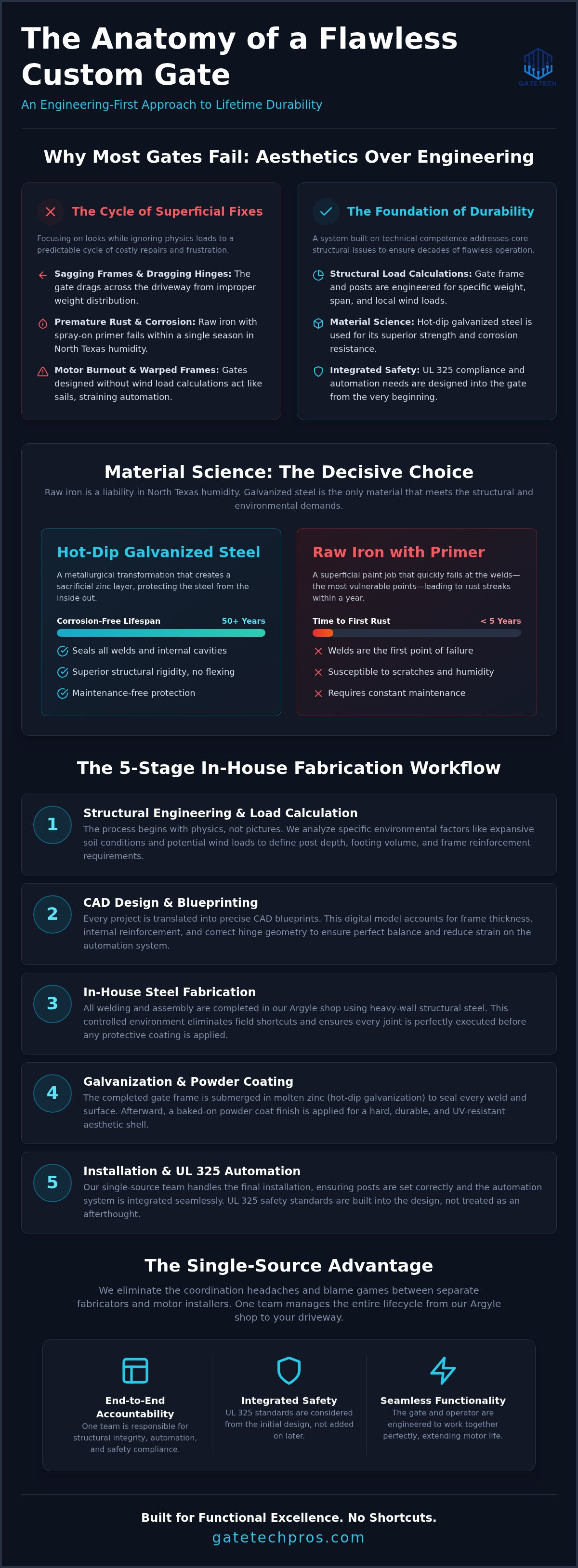
The 5-Stage Custom Gate Design Workflow
A reliable gate isn't the result of luck. It's the product of a disciplined custom gate design process that treats metalwork like a structural engineering project. Most contractors move straight from a handshake to a welding torch. We don't. We follow a five-stage workflow that identifies potential failures before they happen. This methodical approach ensures your entry system functions correctly on day one and year twenty. We prioritize technical verification over salesmanship. If the numbers don't work, the gate won't either.
The Technical Site Survey
Everything begins with a boots-on-the-ground audit of your property. We don't just measure the width of the driveway. We analyze the grade and drainage patterns to prevent gate interference. A three-degree slope can be the difference between a smooth swing and a gate that digs into the concrete. We also identify underground utility lines to ensure safe post-hole digging. This data determines the best gate type for your site. Whether it's a swing, slide, or cantilever system, the choice is dictated by the physical constraints of the land.
CAD Design and Blueprints
Precision starts on the screen. We create detailed CAD blueprints that account for every pound of steel and every square inch of wind load. These aren't just sketches. They're engineering documents. This stage allows you to visualize the gate before the first cut is made in our shop. It's also vital for HOA approvals. We provide accurate renderings that meet strict community standards. This includes engineering the structural supports for custom pedestrian gates to ensure they match the main entry in both style and strength.
Once the design is locked, the workflow moves into physical production:
- Step 3: Shop Fabrication. We use precision cutting and welding in our Argyle facility. Controlled conditions mean perfect joints.
- Step 4: Galvanizing and Coating. We send the finished frame for hot-dip galvanization. This creates a metallurgical bond that stops rust.
- Step 5: Professional Installation. Our crew sets the posts and commissions the automation. We don't leave until the system is UL 325 compliant and moving perfectly.
We manage every phase of the project with a single, accountable team. If you want a gate built to industrial standards, you can start your project with our engineering team today. We don't take shortcuts. We build for the long haul.
Integrating Access Control: Designing for Functionality
Automation is not an add-on. It's a core design requirement. If you treat the motor as an afterthought, you're setting the stage for mechanical failure. A gate that isn't engineered for the specific torque and cycle frequency of an operator will eventually shake itself apart. Our custom gate design process integrates access control from the initial CAD phase. We don't just hang a gate and slap on a motor. We design the frame to house the wiring, mount the brackets, and support the weight of the drive system. It's a unified approach that ensures the electronics and the ironwork function as a single, reliable unit.
Designing for UL 325 safety compliance is mandatory from day one. This isn't just about following rules; it's about liability and logic. A moving steel gate is a massive force that requires sophisticated entrapment protection. We identify potential entrapment zones during the design phase and integrate safety photo eyes and edge sensors into the physical layout. We also plan for telephone entry systems and RFID readers by building dedicated mounting pedestals or integrating them directly into the gate frame. This keeps the installation clean and prevents the "cluttered" look of wires and boxes added after the fact.
Selecting the Right Operator
Horsepower must match the reality of the gate. We calculate the total weight and the surface area to determine the correct motor size. A motor that's too small will burn out in a Texas summer; one that's too large is an unnecessary expense. We prioritize professional-grade operators from manufacturers like LiftMaster and DoorKing. These systems beat retail kits because they're built for high cycle frequencies and offer robust backup power options. In North Texas, where storms can knock out the grid, having a battery backup or a solar array isn't a luxury. It's a necessity for property access. We verify that every operator we install can handle the specific wind loads we calculated during the engineering phase.
Safety and Compliance
Safety is built into the physics of the gate. We adhere to ASTM F2200 standards, ensuring that vertical pickets are spaced so that a 4-inch sphere cannot pass through. This prevents limbs from getting caught in a moving system. We install loop detectors in the driveway to provide automatic vehicle exit and prevent the gate from closing on a car. These sensors are buried in the concrete and linked to the main control board. Even the best systems require attention to stay safe. Linking your installation to a professional gate repairs schedule ensures that safety devices are tested and mechanical hinges are greased. We don't just build for today. We build for twenty years of safe, predictable operation.
Secure Your Property with Engineering-First Design
A custom gate should be a stabilizing asset, not a source of constant repair bills. True success depends on a custom gate design process that prioritizes structural integrity over superficial fluff. By choosing hot-dip galvanized structural steel and engineering for specific North Texas wind loads, you eliminate the risks of mid-season rust and sagging frames. We manage every technical detail in our in-house Argyle fabrication shop. This ensures that the physics of the gate and the precision of the automation work in perfect sync from day one.
Don't settle for field-welded shortcuts or uncertified installers who leave you with a dragging driveway gate. Our team consists of UL 325 safety certified installers who specialize in building systems that function perfectly for 20 years or more. We provide the structural peace of mind required for a high-security entry. When the engineering is right, the function is flawless. We're ready to help you build a perimeter that actually works.
Request a Technical Design Consultation for Your Custom Gate today and invest in a system built to survive the Texas elements.
Frequently Asked Questions
How long does the custom gate design and fabrication process take?
The timeline varies based on the complexity of the project and current material lead times. Typically, a project moves through the technical site survey, CAD engineering, in-house fabrication, and hot-dip galvanizing over several weeks. We don't rush the metallurgical bonding phase because cutting corners on the zinc bath leads to rust later. We provide a projected schedule once the custom gate design process begins and blueprints are approved.
Why is galvanized steel better than traditional wrought iron for gates?
Hot-dip galvanized steel is superior because it creates a permanent chemical bond that prevents oxidation from the inside out. Traditional wrought iron is a liability in the high humidity of the North Texas environment. If the paint on raw iron chips, the metal begins to rot immediately. Galvanized steel provides a sacrificial layer of zinc that protects the frame even if the surface finish is scratched. It ensures a 50-year lifespan.
Can I automate an existing manual gate, or do I need a new design?
You can automate an existing gate only if the frame and hinges can handle the mechanical stress. Many manual gates aren't built for the torque of a motor. We perform a structural diagnostic to check for frame deflection and hinge wear. If the existing gate is too light or poorly balanced, a new custom gate design process is usually necessary to prevent motor burnout and repeated mechanical failure on your driveway.
What is UL 325 compliance and why does it matter for my driveway gate?
UL 325 is the safety standard that governs automated gate systems to prevent injuries and entrapment. Compliance requires at least two independent entrapment protection devices for every potential risk zone. This includes photo eyes and sensing edges that stop the gate if an obstruction is detected. Following these standards is not optional; it is a vital step to ensure your property remains safe and to protect you from legal liability.
How do you prevent a heavy custom gate from sagging over time?
We prevent sagging by using heavy-wall structural steel and setting posts to a depth determined by local soil conditions. Standard gates often fail because the posts aren't deep enough to resist the leverage of a cantilevered load. We use sealed bearing pivots instead of standard hinges to distribute the weight evenly. This engineering ensures the gate remains level and clears the driveway surface for decades without requiring structural adjustments.
Do you handle the electrical work for the gate operators and keypads?
We manage the entire installation, including the low-voltage wiring for operators, keypads, and access control systems. Our one crew approach means you don't have to coordinate between a fence builder and a separate electrician. We set the posts, mount the gate, and commission the electronics ourselves. This eliminates the communication gaps that often lead to non-compliant safety setups or failed motor integrations. We take total accountability for the final result.
What maintenance is required for a custom automated gate system?
Maintenance involves a few critical tasks to ensure long-term reliability. You should grease the bearing pivots every six months and clear any debris from the path of the safety photo eyes. We also recommend testing the battery backup systems annually to ensure they function during North Texas storms. Regular inspections of the weld points and the operator's drive chain prevent small mechanical issues from turning into expensive repairs. Consistency ensures functional excellence.
- custom gate design process
Need this done on your property?
Tell us the gate type, what it's doing, and the address.