
Home/Blog/Pedestrian Gate Access Control Systems: A Guide to Secure Entry Design
August 26, 2026
Pedestrian Gate Access Control Systems: A Guide to Secure Entry Design
Stop fixing failing pedestrian gate access control systems. This guide covers durable hardware, smart integration, and secure entry design for lasting reliab...
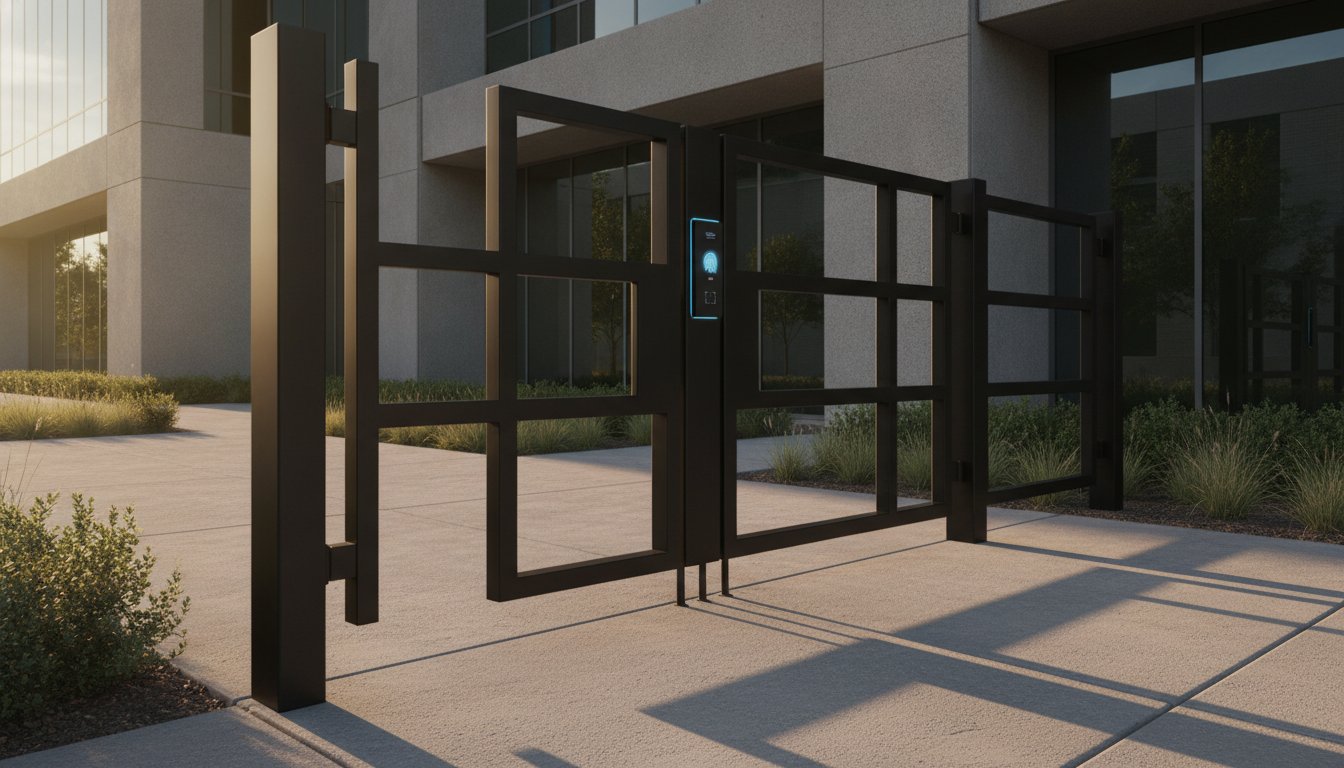
A high-end software suite is useless if it's wired to a cheap plastic keypad that cracks after one season in the sun. True security isn't found in the flashiest app. It's found in the structural integrity of the steel and the reliability of the strike plate. You've likely seen it before. Electronic locks fail to align because a gate sagged. Users get locked out because the interface is too complex for daily use. It's a frustrating cycle of service calls and temporary fixes that most pedestrian gate access control systems can't seem to break.
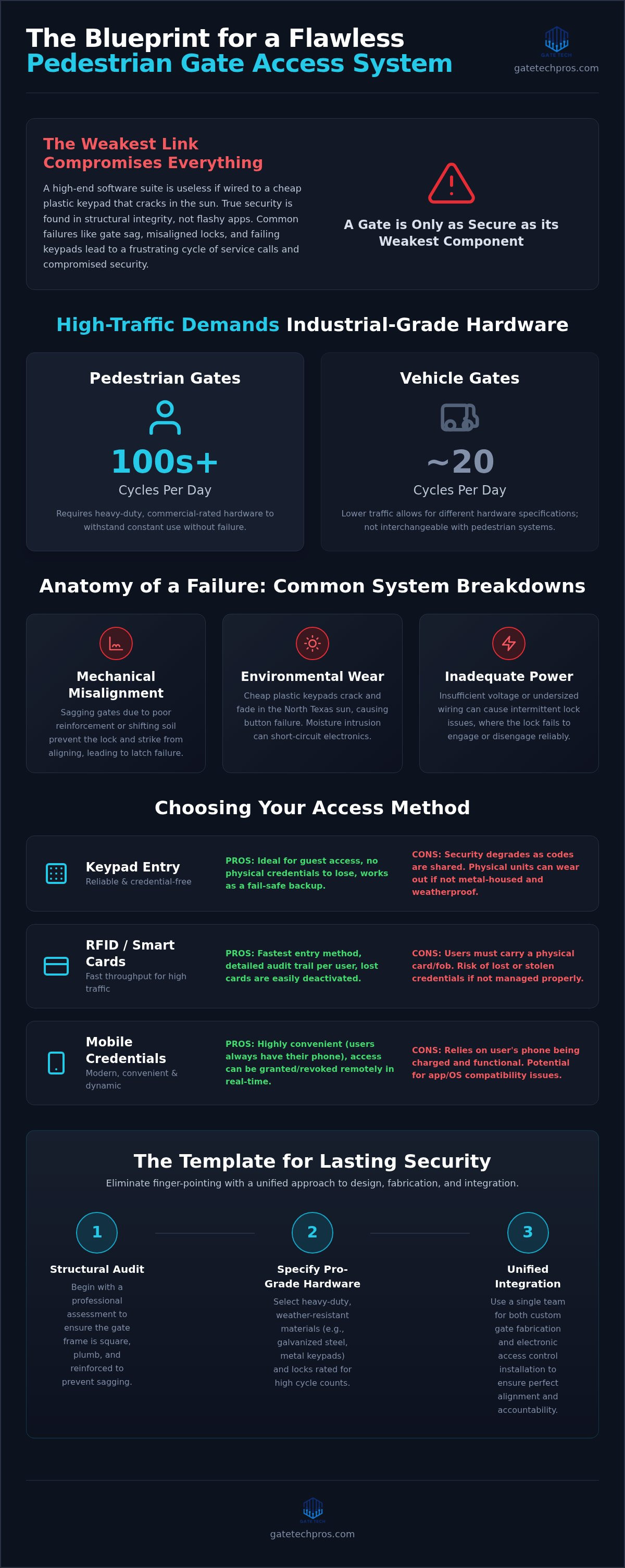
We agree that a gate is only as secure as its weakest component. Whether it's a warped frame or a glitchy reader, a single failure point compromises your entire perimeter. This guide promises to cut through the industry fluff. You'll learn how to integrate professional-grade hardware with custom-fabricated steel gates designed to handle high-traffic loads without shifting. We'll compare the latest access technologies, from mobile credentials to biometric scanners, and provide a blueprint for a system that actually works when you need it to. We're moving past superficial fixes to focus on what builds lasting security: heavy-duty materials and logical engineering.
Key Takeaways
- Pedestrian gates handle higher cycle counts than vehicle entries. Learn to specify hardware that won't fail under constant foot traffic.
- Evaluate pedestrian gate access control systems by comparing the ruggedness of physical keypads against the speed of RFID and mobile credentials.
- Mitigate North Texas environmental risks like sun-cracked keypads and shifting soil with galvanized steel and precise strike alignment.
- Eliminate technical finger-pointing by choosing a unified team that manages both custom fabrication and electronic integration in-house.
- Follow a logical integration template that starts with a structural audit to ensure your gate frame stays square and your locks stay functional.
Understanding Pedestrian Gate Access Control Systems
Pedestrian gate access control systems are electronic setups designed to manage, monitor, and restrict foot traffic through perimeter gates. It's a layer of security that replaces the traditional lock and key with a digital gatekeeper. Understanding Access Control requires looking at both the software logic and the physical hardware. It isn't just about an app; it's about the structural integrity of the entry point. If the gate doesn't latch, the software is irrelevant.
A common mistake is treating pedestrian gates like vehicle gates. They aren't the same. A vehicle gate might cycle twenty times a day, but a pedestrian gate at a high-traffic site might open hundreds of times. This higher cycle count demands industrial-grade hardware. We evaluate the choice between an electric strike and a magnetic lock based on this load. An electric strike is often the superior choice for high-traffic pedestrian gate access control systems because it allows for a mechanical fail-secure setup. Magnetic locks provide immense holding force but rely entirely on constant power. If the power fails without a backup, the gate stays open. We look at the duty cycle of every solenoid we install. A residential strike will burn out under commercial pressure. You need hardware that matches the gate's expected traffic.
Moving to a digital system offers three primary advantages. First, you get detailed audit trails. You see exactly who accessed the site and when. Second, remote management allows you to grant or revoke access instantly. Third, you eliminate the cost and risk of physical keys. If a card is lost, you deactivate it. You don't re-key the whole building.
Commercial vs. Residential Pedestrian Access
Commercial needs focus on high-volume throughput and detailed user logging. Employees need to move quickly without bottlenecking the entrance. Residential systems prioritize user-friendly interfaces for guests and service providers. For apartment complexes or gated communities, scalable telephone entry systems are essential. These allow residents to grant access to visitors remotely, ensuring the perimeter remains secure while maintaining convenience.
Common Fail Points in Pedestrian Entry
Hardware failures usually start with poor engineering. Mechanical misalignment is the most frequent issue we diagnose. This is often caused by sagging driveway gates or pedestrian frames that haven't been properly reinforced against North Texas wind loads. If the gate isn't square, the lock strike won't align. Environmental wear also takes a toll. Cheap plastic keypads crack and fade in the sun, leading to button failure. Lastly, inadequate power supplies cause intermittent lock issues. If the voltage drops, the lock might not engage fully, leaving your property exposed.
Comparing Access Methods: Keypads, RFID, and Mobile
Selecting the right interface for pedestrian gate access control systems is a balance between user convenience and perimeter discipline. You don't pick a technology because it's trendy. You pick it because it survives the environment and the users. Every entry method has a specific use case. A keypad is a utility tool; biometrics are for high-security isolation. Understanding the difference prevents you from over-specifying or under-securing your site.
The Pros and Cons of Keypad Entry
Keypads remain the industry standard for a reason: they work without physical credentials. Users don't have cards to lose or fobs to leave at home. This makes them the most reliable choice for guest access or as a fail-safe backup. However, security degrades as codes are shared. A "permanent" guest code eventually becomes public knowledge. To combat this, we utilize systems that support time-limited codes and multi-user tracking. For North Texas, we never install plastic-housed units. They warp and crack in the heat. We specify backlit, metal-housed keypads that resist UV damage and physical tampering.
RFID and Smart Card Solutions
RFID and proximity cards offer the fastest throughput for high-density environments like apartment complexes or corporate campuses. The user taps and moves. We often integrate these readers directly into custom-fabricated steel pillars for a seamless, vandal-resistant finish. We categorize these into two types:
- Passive RFID: Operates at short range. It's the standard for pedestrians who are physically touching or hovering a card near the reader.
- Active RFID: Used for longer ranges. This is less common for pedestrian gates unless hands-free access is a specific requirement for ADA compliance or industrial logistics.
We favor encrypted credentials over standard ones. Basic 125kHz cards are easy to clone with cheap tools found online. Encrypted smart cards prevent this, ensuring the person at the gate is actually the authorized user.
Cloud-Based and Mobile Integration
Smartphone access is the modern standard for remote management. It's not just about opening a gate with a phone. It's about the data. Cloud-based dashboards allow you to manage permissions from a central office or a mobile device. You get real-time alerts if a gate is propped open or if a strike fails to engage. Integrating video intercoms adds a layer of visual verification. You see the delivery driver before you buzz them in. This tech works best when the hardware is as robust as the software. If you're looking to upgrade an existing entry, our team can help you design a complete access control package that bridges the gap between heavy-duty steel and high-logic software.
Biometrics
For restricted industrial zones, biometrics like fingerprint or facial recognition offer the highest security. These eliminate credential sharing entirely. The user is the key. While the hardware cost is higher, biometrics are the definitive choice for sites where accountability is non-negotiable. It's a specialist solution for those who prioritize absolute verification over high-speed throughput.
Environmental Engineering for North Texas Reliability
Standard weatherproofing isn't enough in the DFW Metroplex. North Texas environments present two major threats: extreme UV radiation and shifting expansive clay soil. If you ignore these local factors, your pedestrian gate access control systems will fail within twenty-four months. We prioritize NEMA-rated enclosures for all control boards. This seals out the high humidity and nesting insects that frequently short-circuit exposed electronics. Proper galvanized steel gate maintenance ensures the frame remains a reliable path for electrical grounding. This protects your sensitive logic boards from static build-up and surges during the North Texas storm season.
Heat Resistance and UV Protection
Direct sunlight kills touchscreens and warps gaskets. We select hardware with operating temperature ratings of at least 140°F. Anything less is a liability during a Texas August. Plastic components are the first to fail. They become brittle and crack under high UV exposure. We install protective hoods, or 'eyebrows', over readers and keypads. This simple addition shades the interface and prevents the screen from washing out in high glare. Metal housings are mandatory. This, not plastic, is how you build for longevity. It’s a pragmatic choice for a brutal climate.
Post Stability and Lock Alignment
The most advanced electronic lock is useless if the gate doesn't latch. North Texas clay soil expands and contracts with moisture levels, causing posts to tilt. Deep concrete footings are non-negotiable. We set posts deep enough to resist this movement, but we also plan for the inevitable. We use heavy-duty adjustable hinges to manage seasonal shifts. This allows us to maintain the precise 'gap' required for electric strikes to engage. If the gate sags even a quarter-inch, the latch will bind. This causes the solenoid to burn out as it struggles to release. Proper engineering solves the mechanical bind before it starts. It’s about building a foundation that respects the soil it sits on.
Reliability in this region requires a boots-on-the-ground understanding of physics. We don't just wire a lock; we stabilize the entire entry. By using galvanized steel and reinforced post designs, we ensure the electronics aren't fighting a losing battle against the earth. A stable gate is a secure gate. This methodical approach separates a professional installation from a temporary fix.
Design and Integration: The Template for Success
Success with pedestrian gate access control systems depends on a methodical integration template. It's easy to buy a smart controller. It's much harder to make it function reliably on a moving steel structure. We follow a five-step progression to ensure the hardware survives the mechanical stresses of daily use. This isn't a "plug-and-play" installation. It's a structural engineering project with a digital interface.
- Step 1: Structural Audit. We verify the gate frame is rigid and square. A sagging gate binds the lock strike, causing the solenoid to fail.
- Step 2: Power and Data. We prioritize hardwired low-voltage lines. Wireless bridges are a last resort for remote perimeters where trenching is impossible.
- Step 3: Hardware Mounting. We weld custom brackets for permanent alignment. Bolt-on solutions eventually loosen due to constant gate vibration.
- Step 4: Safety Compliance. We audit the site for entrapment zones and reach-through vulnerabilities to meet current safety codes.
- Step 5: Commissioning. This is the final verification of user codes, mobile credential sync, and fail-secure logic testing.
UL 325 and Safety Standards for Pedestrians
Many IT-focused installers ignore UL 325 safety standards. This is a massive liability. Pedestrian gates have specific requirements that differ from vehicular entries. One critical rule is the "reach-through" prevention. You must ensure a user cannot reach through the gate pickets to press the exit button or turn a manual lever. We also prioritize emergency egress. Installing panic bars ensures occupants can exit during a power failure or emergency, regardless of the electronic lock status. Safety isn't an add-on; it's a core design requirement.
Custom Fabrication for Hardware Integration
We build custom pedestrian gates with internal wire chases. This hides the low-voltage cabling inside the steel tubing, protecting it from weather and vandals. Recessed mounting for keypads adds another layer of security. It keeps the interface flush with the pillar, making it nearly impossible to pry off. If you're adding a heavy magnetic lock to a top rail, the frame must be engineered for that specific weight to prevent twisting. If you're ready to build a system that won't fail, contact our fabrication team for a complete entry package that includes both the gate and the electronics.
Logical engineering prevents the "finger-pointing" common in this industry. When the gate builder and the security guy are the same team, the system works. We don't rely on superficial fixes. We rely on verified structural integrity and precise electronic integration. This is the only way to ensure your perimeter stays closed when it's supposed to be.
Why Professional Installation Outperforms DIY Kits
A DIY kit is a liability disguised as a bargain. Off-the-shelf pedestrian gate access control systems often rely on consumer-grade components that aren't rated for the high cycle counts of a commercial or multi-family perimeter. These kits lack the structural reinforcement needed to house electronic locks and the surge protection required to survive a North Texas storm. Professional installation isn't just about wiring; it's about engineering a system where the physical gate and the digital logic function as a single unit. This, not a box of parts from a big-box store, is how you achieve a decade of reliable service.
The "One Crew" advantage is our primary methodology. In this industry, technical failure often leads to a cycle of finger-pointing. The gate builder blames the IT guy when the strike fails to align. The IT guy blames the gate builder for a sagging frame. We eliminate this friction by handling both custom fabrication and electronic integration in-house. When one team is accountable for the structural audit, the welding, and the programming, the system works. We don't just swap parts. We perform professional diagnostics to identify the root cause of a failure, whether it's a voltage drop or a mechanical bind.
Long-term reliability depends on industrial-grade hardware. We are certified installers for LiftMaster and DoorKing. These brands are the industry standard for a reason. They offer the duty cycles and weather resistance that cheap alternatives lack. We prioritize these professional-grade components because they allow for granular control and detailed audit trails that consumer kits simply cannot provide. It’s the difference between a temporary fix and a permanent security solution.
Gate Tech Pros: The Specialist Approach
Our in-house shop in Argyle, TX, is the foundation of our work. We build custom pedestrian gates designed specifically for North Texas wind loads and spans. We don't use standard mild steel that rusts after the first rain. We utilize galvanized steel for superior corrosion resistance and structural longevity. This "no-shortcuts" approach extends to our repairs. If your current system is crashing, we don't just reset the board. We diagnose the environmental and mechanical factors causing the glitch and provide a definitive technical resolution.
Next Steps for Your Property
Securing your perimeter starts with an honest assessment of your current vulnerabilities. A site audit can reveal whether your existing gate frame is rigid enough for an upgrade or if your power supply is insufficient for modern mobile credentials. We help you design a complete entry package that integrates the gate, the operator, and the access control into a seamless, high-logic system. Don't settle for a fragmented security plan that relies on superficial fixes. Contact Gate Tech Pros for a custom access control consultation. We build for those who value functional excellence and structural integrity above all else.
Securing Your Perimeter with Structural Integrity
Reliable entry design isn't about the newest app on the market. It's about the marriage of high-logic software and heavy-duty structural steel. You've learned that North Texas soil and UV exposure demand a specialist's touch. Without deep footings and galvanized steel, even the most expensive electronics will eventually fail. A successful installation requires a "no-shortcuts" approach that treats the gate and the lock as a single machine. This methodical integration is what separates a secure facility from a constant maintenance headache.
Modern pedestrian gate access control systems require precision from the ground up. As certified integrators, we handle every phase from our in-house fabrication shop in Argyle, TX. We specialize in galvanized steel durability to ensure your investment resists corrosion and wind loads for years to come. Don't leave your property's security to a fragmented team of contractors who don't understand the mechanical requirements of a gate.
Design your custom pedestrian entry system with Gate Tech Pros to ensure your perimeter is built correctly the first time. We're ready to help you build a system that works exactly as intended.
Frequently Asked Questions
What is the best access control system for an HOA pedestrian gate?
Telephone entry systems with cloud-based management are the most effective for community perimeters. These allow residents to grant guest access remotely while providing the board with detailed audit trails. We recommend industrial-grade units from DoorKing or LiftMaster because they survive high cycle counts. These systems integrate well with RFID fobs for residents, ensuring speed and security. Avoid residential-grade kits; they aren't built for the daily traffic of an HOA.
Can I use a smartphone to open my pedestrian gate remotely?
Yes, modern pedestrian gate access control systems utilize mobile credentials to allow remote opening and management. You can buzz in a delivery driver from your phone or revoke a contractor's access instantly. We utilize cloud-based platforms that provide real-time alerts if a gate is left propped open. This technology works best when paired with a hardwired data connection to ensure the signal is never lost when you need it most.
What happens to my electronic gate lock during a power outage?
Your lock's behavior depends on whether it's configured as fail-safe or fail-secure. Fail-secure locks stay locked when power is lost, which is the standard for perimeter security. We install dedicated battery backups for all control boards to ensure the system remains operational during local grid failures. Without a backup, a fail-safe magnetic lock will simply release, leaving your property entirely unsecured until the power is restored.
Is an electric strike or a magnetic lock better for pedestrian gates?
Electric strikes are generally superior for pedestrian gates because they allow for mechanical latching and fail-secure operation. They keep the gate physically latched even without power. Magnetic locks provide high holding force but require constant power and can be prone to alignment issues if the gate shifts. We prefer strikes for high-traffic sites because they integrate better with standard door hardware and provide a more reliable physical deterrent.
Do pedestrian gates need to follow UL 325 safety standards?
Yes, all automated pedestrian gates must comply with UL 325 safety standards to prevent injury and entrapment. This includes requirements for separate pedestrian and vehicular entrances and specific reach-through protections. You must ensure that no one can reach through the gate to activate an exit button or lever. Professional installation ensures your site meets these legal requirements, protecting you from liability while ensuring the system operates safely for all users.
How much does it cost to install a pedestrian gate access control system?
Costs vary significantly based on the hardware complexity and the structural requirements of the gate. A basic keypad setup is less intensive than a multi-user RFID system with cloud integration. You must also account for custom fabrication and trenching for power and data lines. We provide comprehensive site audits to determine the exact requirements for your property, focusing on long-term reliability rather than the lowest initial sticker price.
Can I add access control to an existing manual pedestrian gate?
You can add access control to an existing gate if the frame is structurally sound and square. We perform a structural audit first to ensure the hinges can handle the weight of new hardware and that the latch will align with an electric strike. If the gate sags or warps, it must be reinforced or replaced. We often fabricate custom mounting brackets to integrate electronics into older manual frames effectively.
What is the difference between fail-safe and fail-secure locks?
A fail-safe lock unlocks when power is removed, which is often a requirement for interior fire doors. A fail-secure lock remains locked when power is lost, making it the correct choice for perimeter pedestrian gate access control systems. Fail-secure hardware ensures your property stays protected during an outage. We pair these with mechanical egress hardware, like panic bars, to ensure people can still exit safely during an emergency.
- pedestrian gate access control systems
Need this done on your property?
Tell us the gate type, what it's doing, and the address.